
Contact Phone
Contact Mail

Contact Phone
Contact Mail


My purpose is to use computer science and artificial intelligence to create innovative solutions that expand access to education, improve health and well-being, and empower people to reach their full potential.


Projects
Projects
Transforming ideas into beautiful, functional, and meaningful digital experiences.
Transforming ideas into beautiful, functional, and meaningful digital experiences.
Transforming ideas into beautiful, functional, and meaningful digital experiences.

/001
AI Caretaker
Dementia care frequently requires continuous supervision, a demand that becomes increasingly difficult when caregivers must balance additional responsibilities such as work or school. This challenge became personal when my grandfather, diagnosed with mild dementia, wandered from home while alone, revealing a critical gap in existing care technologies. While existing tools aim to support dementia patients, they often rely on manual patient input, an expectation that is unreliable for individuals with impaired memory and judgment. To address this limitation, I developed an AI-based voice-interactive caretaker to assist patients through natural, everyday conversation rather than commands or interfaces. Operating through a physical form factor such as a wearable or tabletop device, the system continuously listens and interprets patient speech, determining whether it reflects daily activity, medication intake, an emergency, or casual conversation. When relevant, activities are inferred and logged, medication intake is recorded while reminders are seamlessly integrated into ongoing dialogue, and emergencies are detected, assigned a severity score, and communicated to caregivers via real-time SMS alerts; otherwise, the system continues to facilitate conversation unobtrusively. To evaluate system viability, twelve scripted scenarios representing realistic and edge-case interactions are executed across ten trials each, measuring speech recognition latency, inference and response time, data logging efficiency, emergency detection accuracy, and severity scoring efficiency. Quantitative analysis of these metrics assesses reliability and highlights opportunities for optimization. As dementia prevalence continues to rise, this research explores how human-centred AI systems can enhance patient safety, reduce caregiver stress, and provide an ethical, scalable framework for home-based care.

/001
AI Caretaker
Dementia care frequently requires continuous supervision, a demand that becomes increasingly difficult when caregivers must balance additional responsibilities such as work or school. This challenge became personal when my grandfather, diagnosed with mild dementia, wandered from home while alone, revealing a critical gap in existing care technologies. While existing tools aim to support dementia patients, they often rely on manual patient input, an expectation that is unreliable for individuals with impaired memory and judgment. To address this limitation, I developed an AI-based voice-interactive caretaker to assist patients through natural, everyday conversation rather than commands or interfaces. Operating through a physical form factor such as a wearable or tabletop device, the system continuously listens and interprets patient speech, determining whether it reflects daily activity, medication intake, an emergency, or casual conversation. When relevant, activities are inferred and logged, medication intake is recorded while reminders are seamlessly integrated into ongoing dialogue, and emergencies are detected, assigned a severity score, and communicated to caregivers via real-time SMS alerts; otherwise, the system continues to facilitate conversation unobtrusively. To evaluate system viability, twelve scripted scenarios representing realistic and edge-case interactions are executed across ten trials each, measuring speech recognition latency, inference and response time, data logging efficiency, emergency detection accuracy, and severity scoring efficiency. Quantitative analysis of these metrics assesses reliability and highlights opportunities for optimization. As dementia prevalence continues to rise, this research explores how human-centred AI systems can enhance patient safety, reduce caregiver stress, and provide an ethical, scalable framework for home-based care.
/001
AI Caretaker
Dementia care frequently requires continuous supervision, a demand that becomes increasingly difficult when caregivers must balance additional responsibilities such as work or school. This challenge became personal when my grandfather, diagnosed with mild dementia, wandered from home while alone, revealing a critical gap in existing care technologies. While existing tools aim to support dementia patients, they often rely on manual patient input, an expectation that is unreliable for individuals with impaired memory and judgment. To address this limitation, I developed an AI-based voice-interactive caretaker to assist patients through natural, everyday conversation rather than commands or interfaces. Operating through a physical form factor such as a wearable or tabletop device, the system continuously listens and interprets patient speech, determining whether it reflects daily activity, medication intake, an emergency, or casual conversation. When relevant, activities are inferred and logged, medication intake is recorded while reminders are seamlessly integrated into ongoing dialogue, and emergencies are detected, assigned a severity score, and communicated to caregivers via real-time SMS alerts; otherwise, the system continues to facilitate conversation unobtrusively. To evaluate system viability, twelve scripted scenarios representing realistic and edge-case interactions are executed across ten trials each, measuring speech recognition latency, inference and response time, data logging efficiency, emergency detection accuracy, and severity scoring efficiency. Quantitative analysis of these metrics assesses reliability and highlights opportunities for optimization. As dementia prevalence continues to rise, this research explores how human-centred AI systems can enhance patient safety, reduce caregiver stress, and provide an ethical, scalable framework for home-based care.
/002
Lifting Soulz Foundation
Lifting Soulz Foundation is a social impact initiative focused on uplifting communities through compassion, support, and meaningful action. The project aims to create positive change by connecting people, providing resources, and empowering individuals to build a better future.

/002
Lifting Soulz Foundation
Lifting Soulz Foundation is a social impact initiative focused on uplifting communities through compassion, support, and meaningful action. The project aims to create positive change by connecting people, providing resources, and empowering individuals to build a better future.

Activities
Extracurricular Activities
Extracurricular Activities
Extracurricular Activities
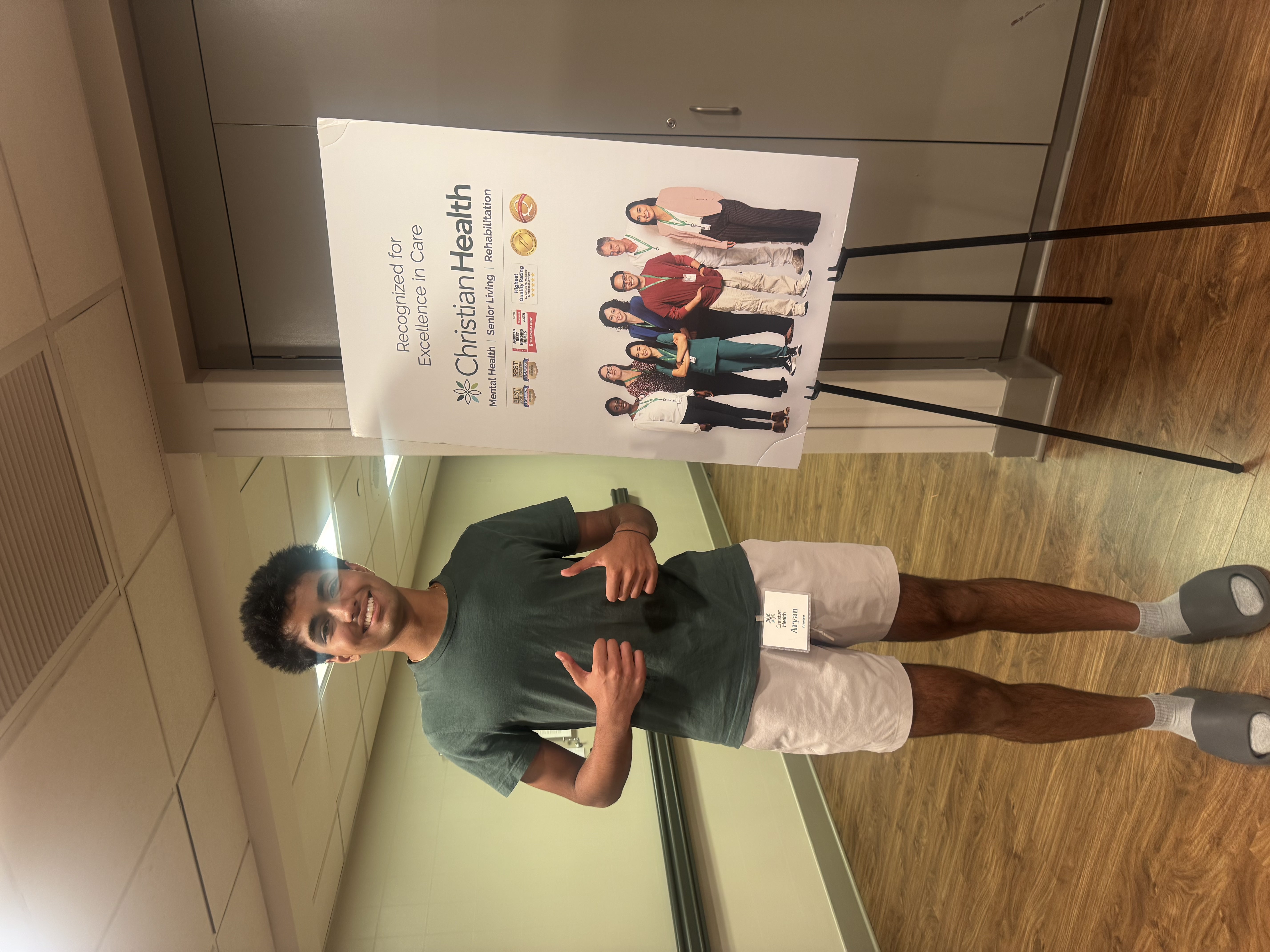
Nursing Home Volunteer
Assisted residents to, from and through physical therapy; spent each trip engaged in conversation, learning about their days, stories, and struggles.

Nursing Home Volunteer
Assisted residents to, from and through physical therapy; spent each trip engaged in conversation, learning about their days, stories, and struggles.
Varsity Golf Team Captain
Promoted to captain for junior year; organized team dinners and celebrations; varsity starter all three seasons and in conference tournaments

Robotics Team
Raised $2,500 from sponsors and recruited 2 mentors over 2 years; helped design and code the robot for league tournaments, earning awards both seasons.

Skills
Interships & Technical Abilities
Interships & Technical Abilities







Achievements
Awards & Achievements
Awards & Achievements

USACO Gold
Feb 2026

NHS

Interests
Unique Interests

Recommendations


